The word "agent" is doing real work here: this is software that pursues a goal, not software that completes a sentence.
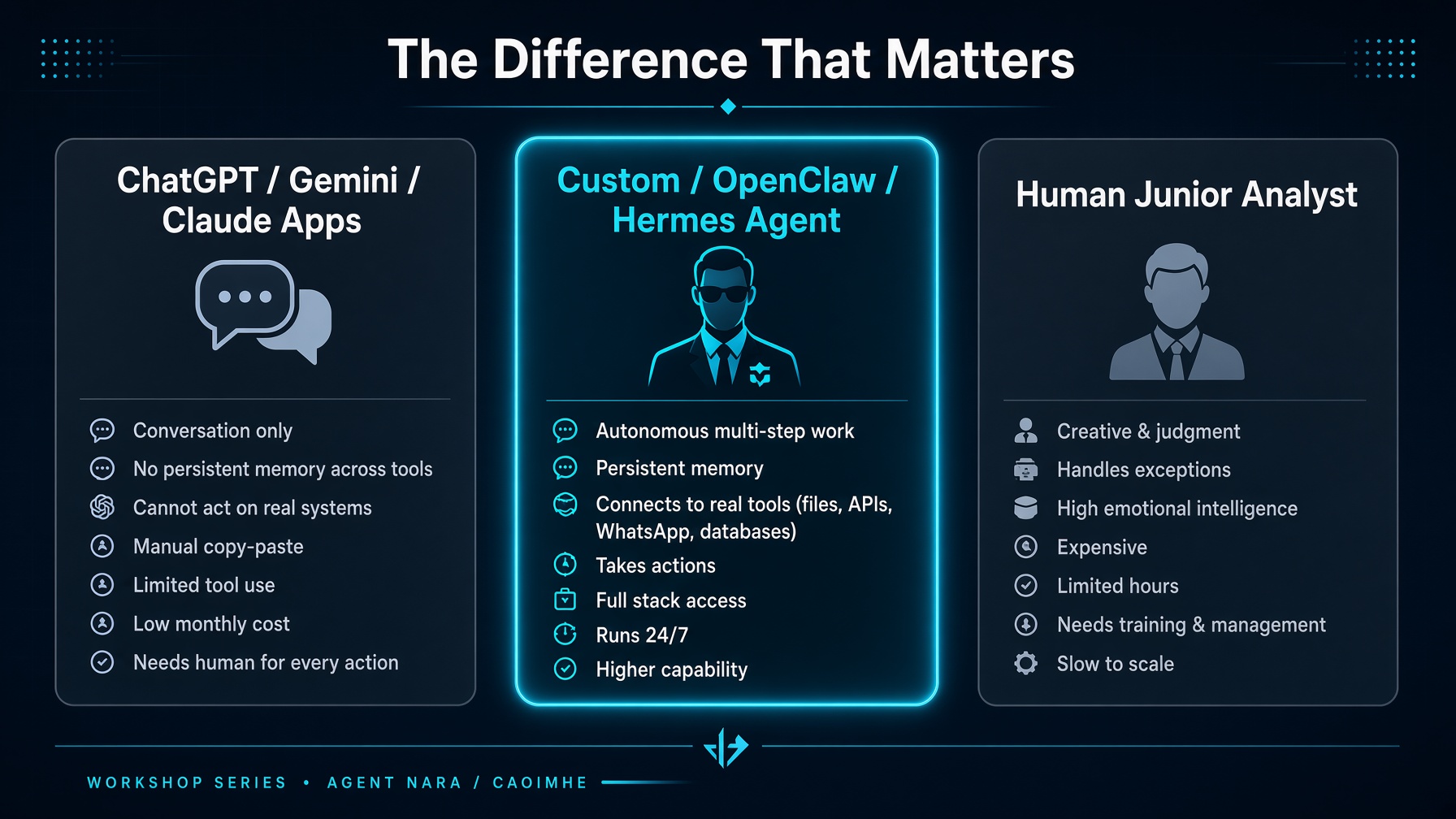
You ask, it answers, it forgets. It waits for you, gives one reply at a time, and touches nothing: no files, no tools, no follow-through. Every task starts again from zero.
You set a goal, it works. It plans the steps, operates real tools (browser, files, email, databases), checks its own output, remembers what it learned, and keeps going while you sleep.
None of these is science fiction. Each shipped, publicly, between late 2025 and now.
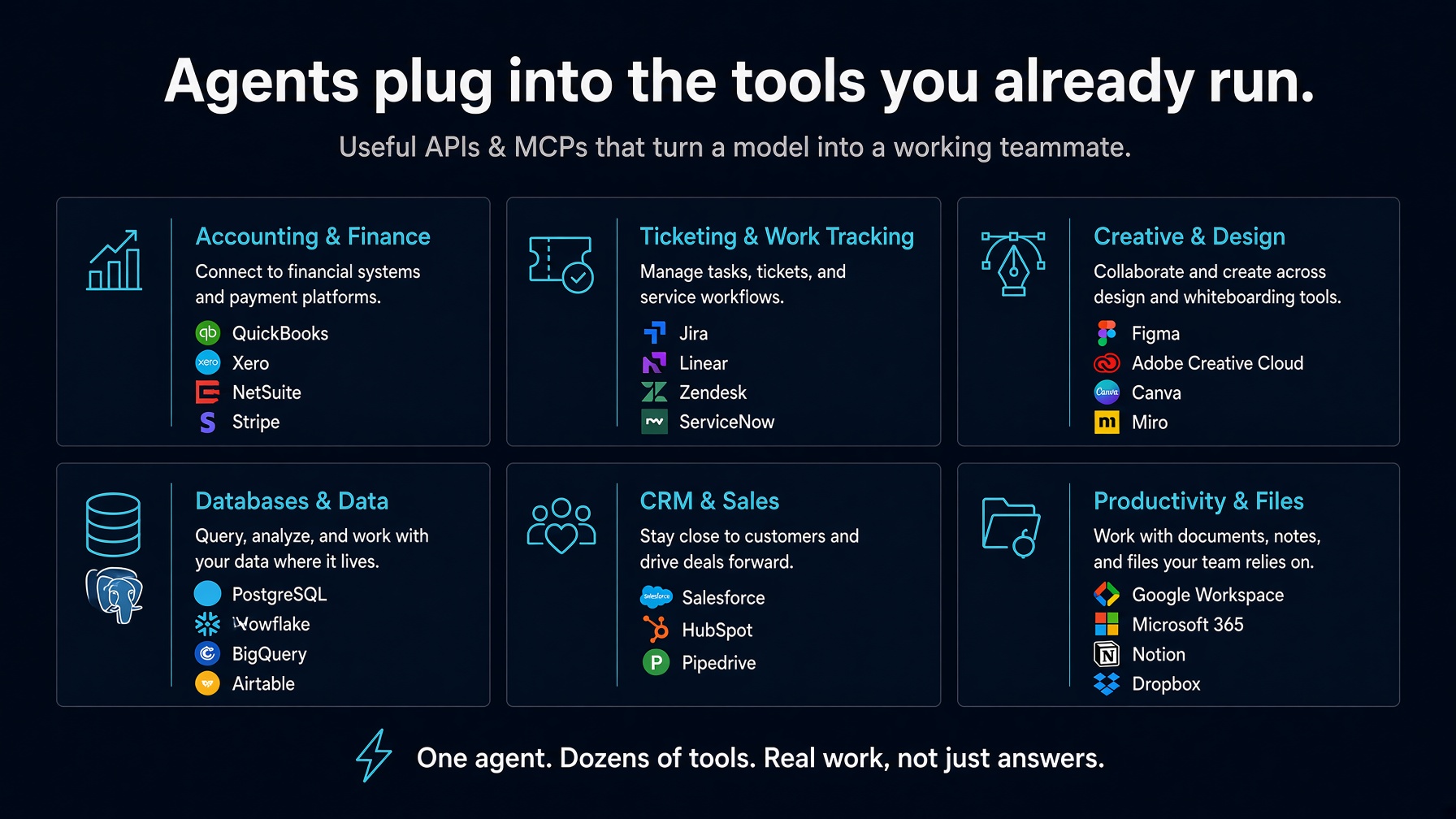
Models learned to operate software: run commands, browse, query databases, send messages.
Agents keep context across days and tasks. They know your projects, your style, your data.
Work continues unattended. The agent plans, acts, checks its result, and tries again.
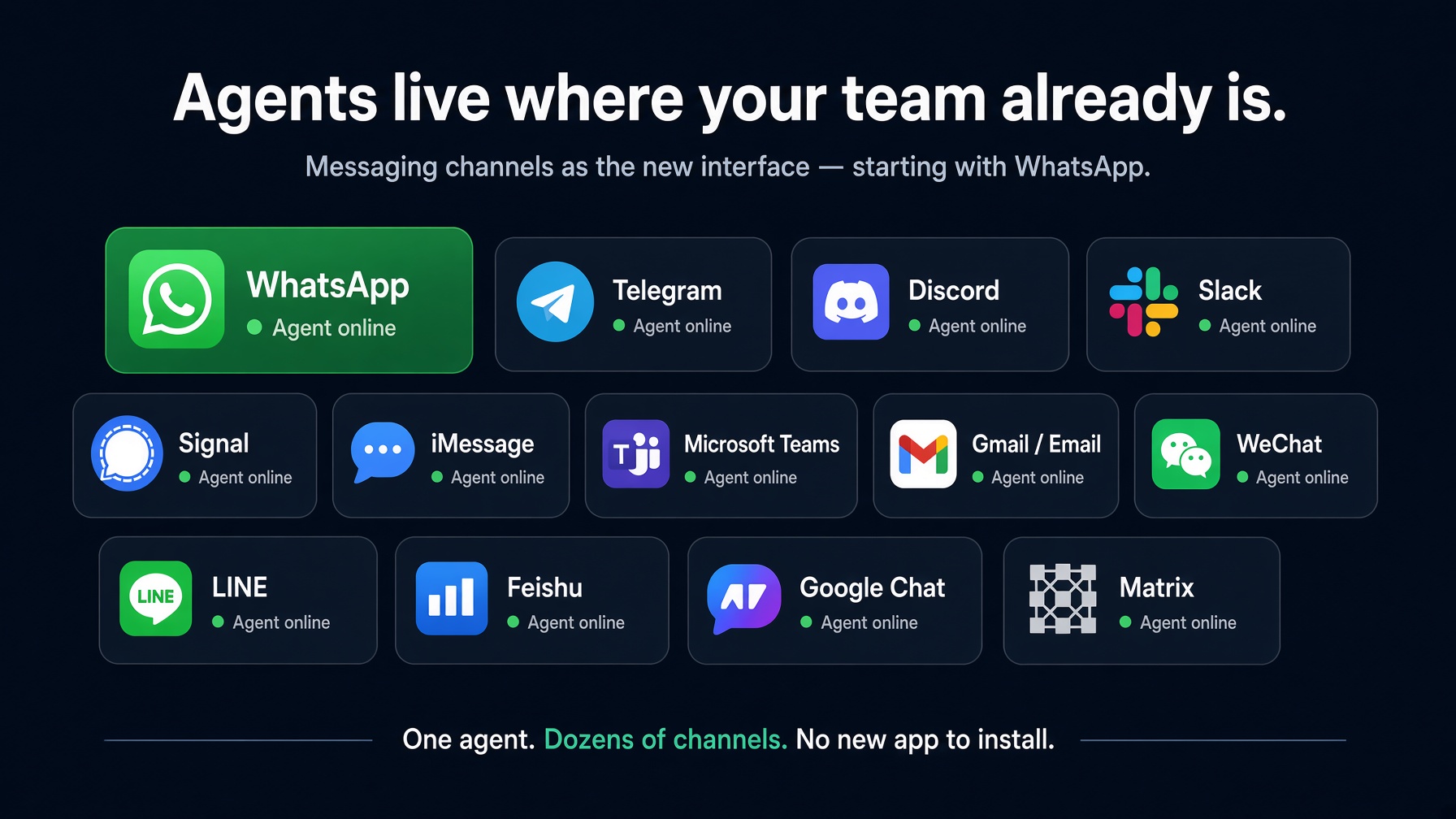
The agent lives in WhatsApp and Telegram, not in yet another app your team must learn.
Budget models now run junior-analyst work at 1 to 3 percent of frontier token prices.
Complete agent stacks are free on GitHub and run on a laptop. No vendor required.
Two open-source personal agents, built outside every major AI lab, produced these numbers in under nine months. Every figure below is dated and sourced.
OpenClaw, shipped 24 November 2025 as one developer's weekend project, counted 386,400 stars by 16 August 2026: one of the fastest-growing open-source projects in history.
Hermes Agent's volume on OpenRouter in the 30 days to 16 August 2026, holding the number one global rank among all AI applications.
The month agent-driven traffic passed human traffic on OpenRouter, at roughly 15 times the tokens per request.
From first release to trillions of tokens a month, with no marketing budget and no sales team.
Every previous enterprise software wave came top-down: procurement, licences, rollout. This one is bottom-up, and that changes what "adoption" means.
Open source, November 2025. No licence, no sales team.
One evening, on a laptop. No procurement, no ticket, no approval.
Email, files, chats, calendar, a personal API key.
Ungoverned, unlogged, invisible to the organisation.
Strip away the hype and every agent is the same simple machine. Understanding this loop is all the technical depth a leader needs.
"Code these 2,000 open ends by tonight."
Break the goal into steps it can execute.
Files, browser, database, code, email.
Do the step. Really do it, not describe it.
Inspect its own result. Retry if wrong.
Write what it learned to memory for next time.
The Monday-morning competitive scramble, retired.
A junior analyst spends Monday morning pulling competitor prices, campaign launches, review scores and social chatter into a deck nobody reads until Tuesday. Coverage is whatever one person could check before the meeting.
An agent sweeps the same sources every night: pricing pages, campaigns, ratings, store listings. It drafts the digest, flags what moved and why it matters, and delivers it to the team's WhatsApp before the 9am meeting, with every source logged.
The honest version for a room of research buyers: agents do not replace insight. They compress the hours between fieldwork and insight.
Thousands of verbatims themed, counted and quoted by morning, with a human reviewing the codeframe instead of building it.
Eight focus groups in, one structured findings document out, every claim traceable to the transcript line it came from.
Routing logic, translations and quota maths checked by an agent that never gets bored on question 47.
The agent drafts the data story overnight. Your senior team spends its time on the "so what", not the chart formatting.
The scenario everyone in this room can start personally, this quarter, without a committee.
Overnight email sorted into "needs you", "needs a reply I drafted", and "noise", waiting on WhatsApp when you wake.
One page per meeting: who, the history, the open items, the numbers you will be asked about.
Message it a voice note in the car; a structured brief is in your inbox before you park.
It remembers what you promised, to whom, by when, and nags you the way a good chief of staff does.
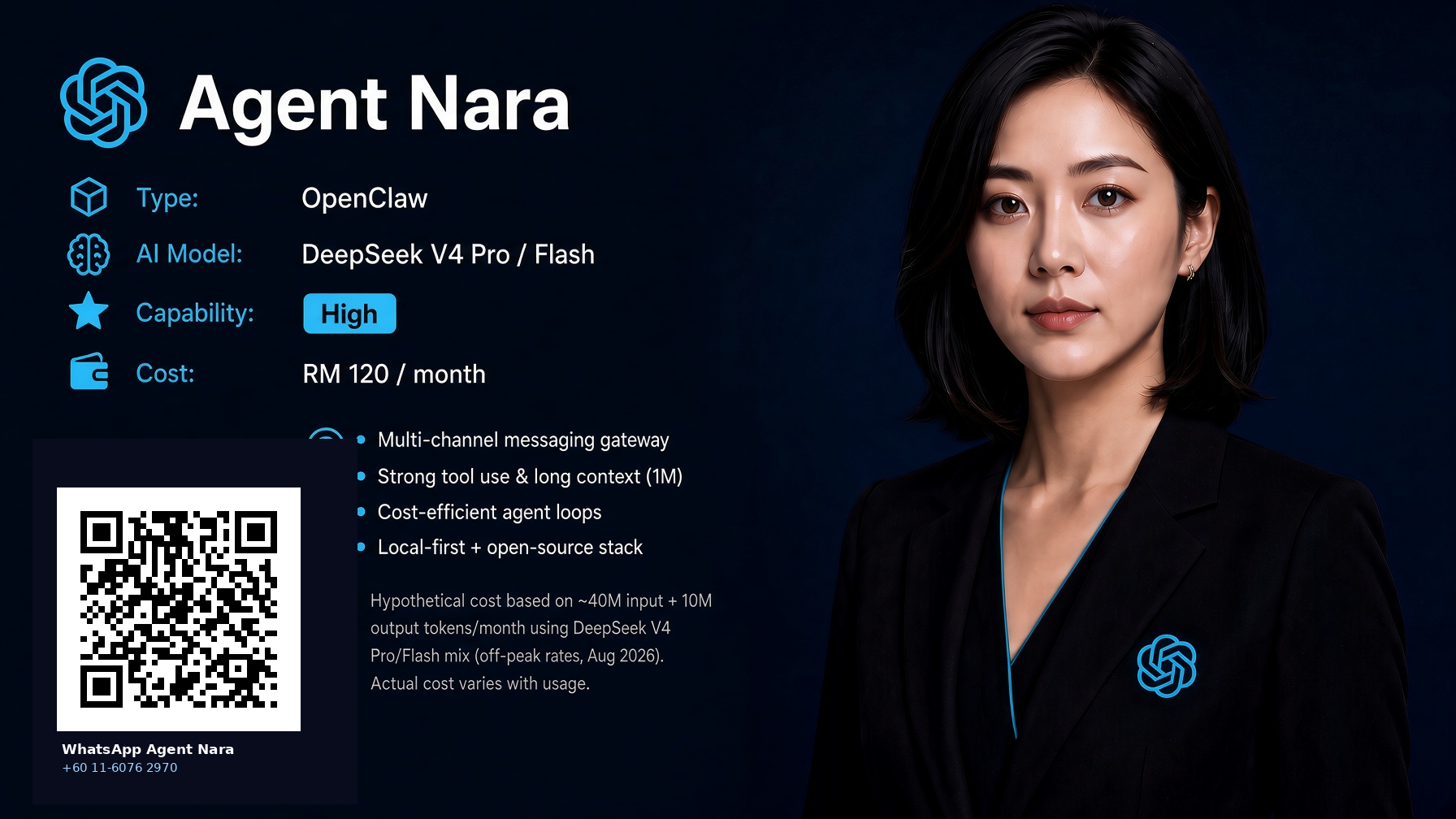
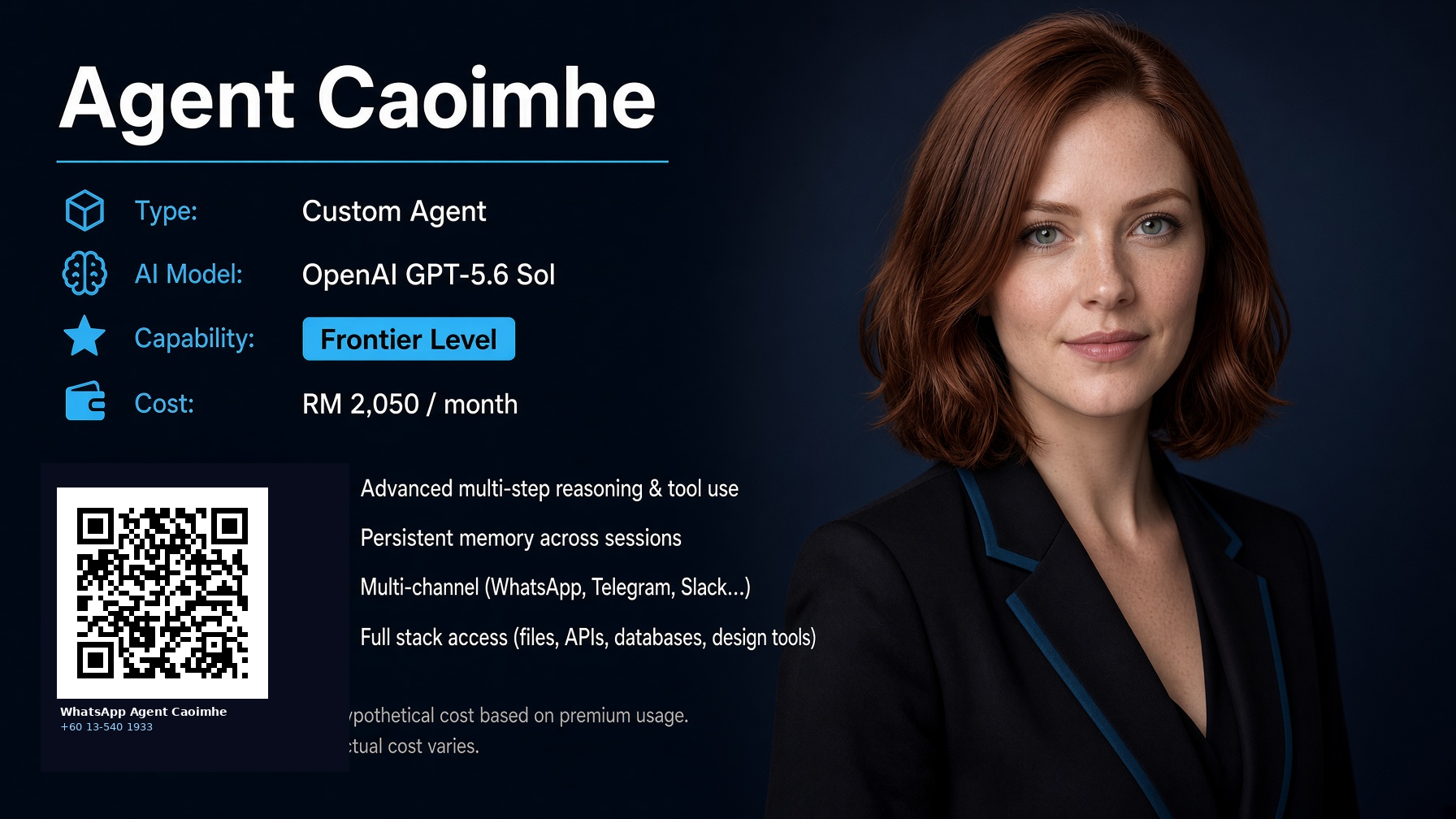
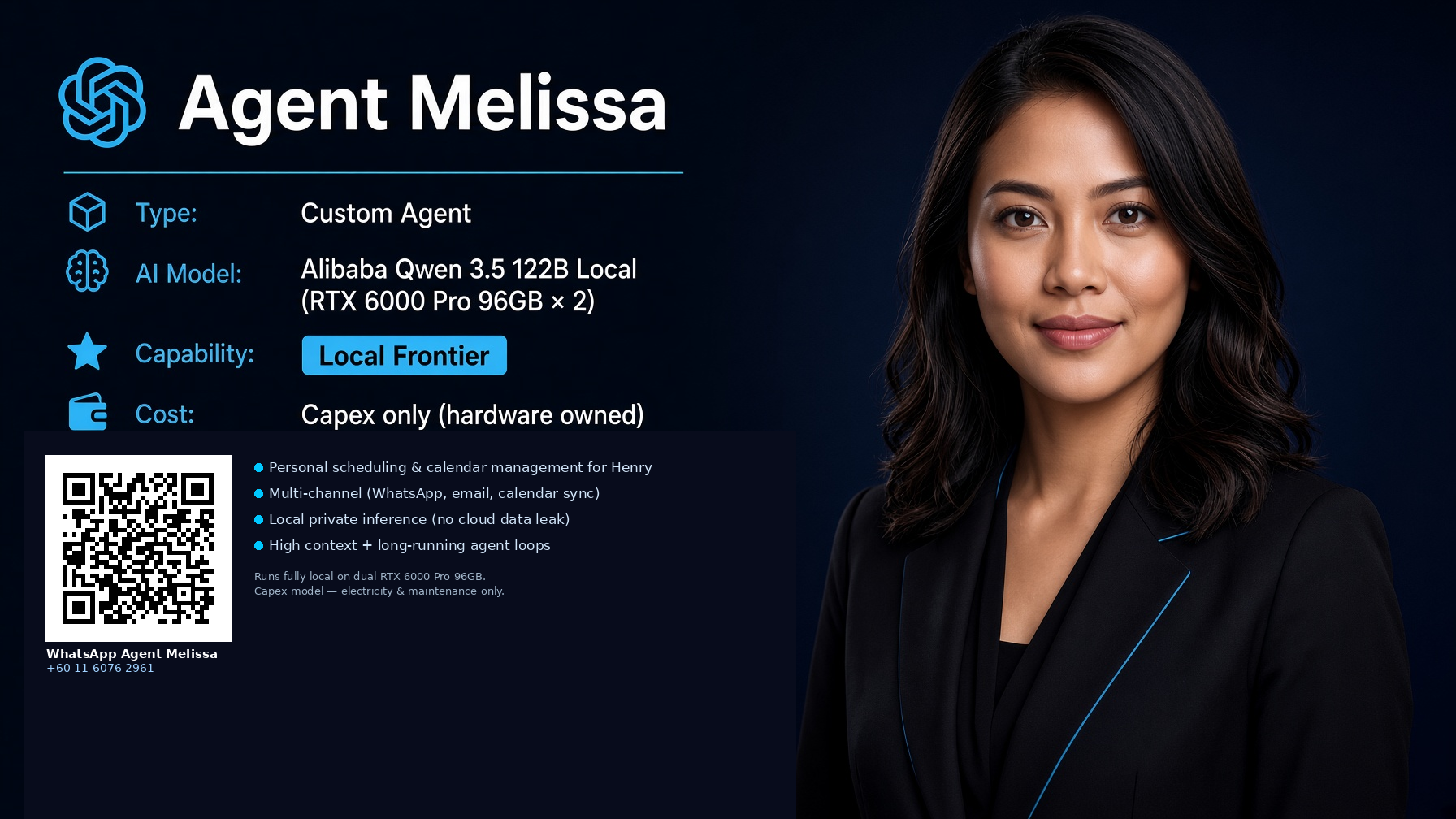
Two live agents, on WhatsApp, right now. Same tools, same data, very different brains. Scan, say hello, and ask about Malaysia.
aiagent.research.my/wa1
Deep reasoning, careful analysis, frontier-class pricing. Ask it the hard, multi-step questions.
aiagent.research.my/wa2
Fast, cheap, surprisingly capable. Ask it the same questions and feel the difference for yourself.
The demo agents are not browsing the open web. They are querying structured data assets, the same way an agent inside your business would query yours.
population fact rows, plus income, poverty and Gini for 999 geographies down to DUN level
Business censusbusinesses, 1.9M of them Malaysian, with 27.9M contact records
Propertylistings, prices and media refreshed continuously
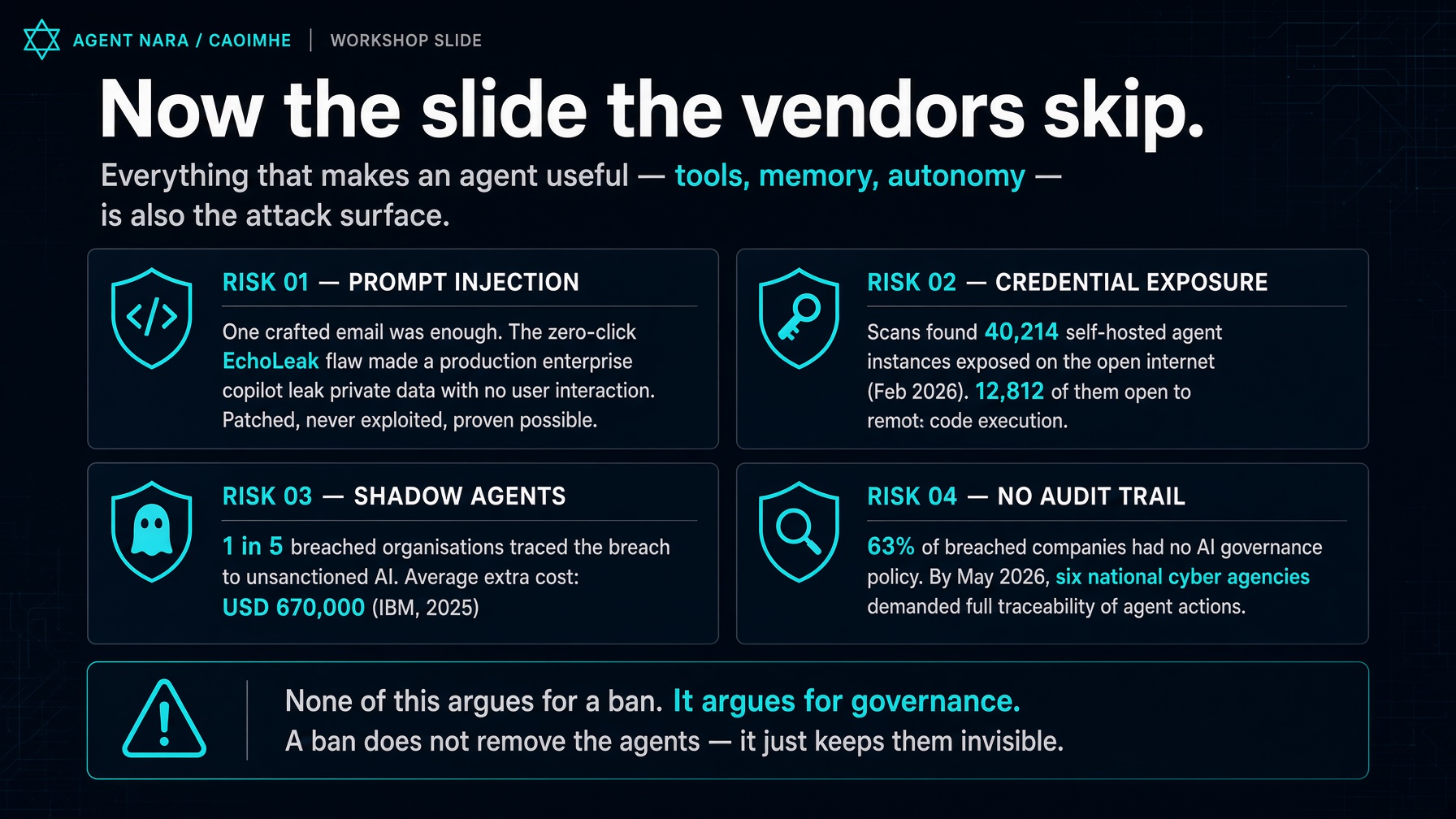
Everything that makes an agent useful, the tools, the memory, the autonomy, is also the attack surface. Four risks, all real, all documented, all with dates.
One crafted email was enough: the zero-click EchoLeak flaw made a production enterprise copilot leak private data with no user interaction. Patched, never exploited, proven possible.
Scans found 40,214 self-hosted agent instances exposed on the open internet in February 2026, 12,812 of them open to remote code execution.
One in five breached organisations traced the breach to unsanctioned AI, at an average of USD 670,000 in extra cost (IBM, 2025).
63 percent of breached companies had no AI governance policy at all. By May 2026, six national cyber agencies had issued joint guidance demanding full traceability of agent actions.
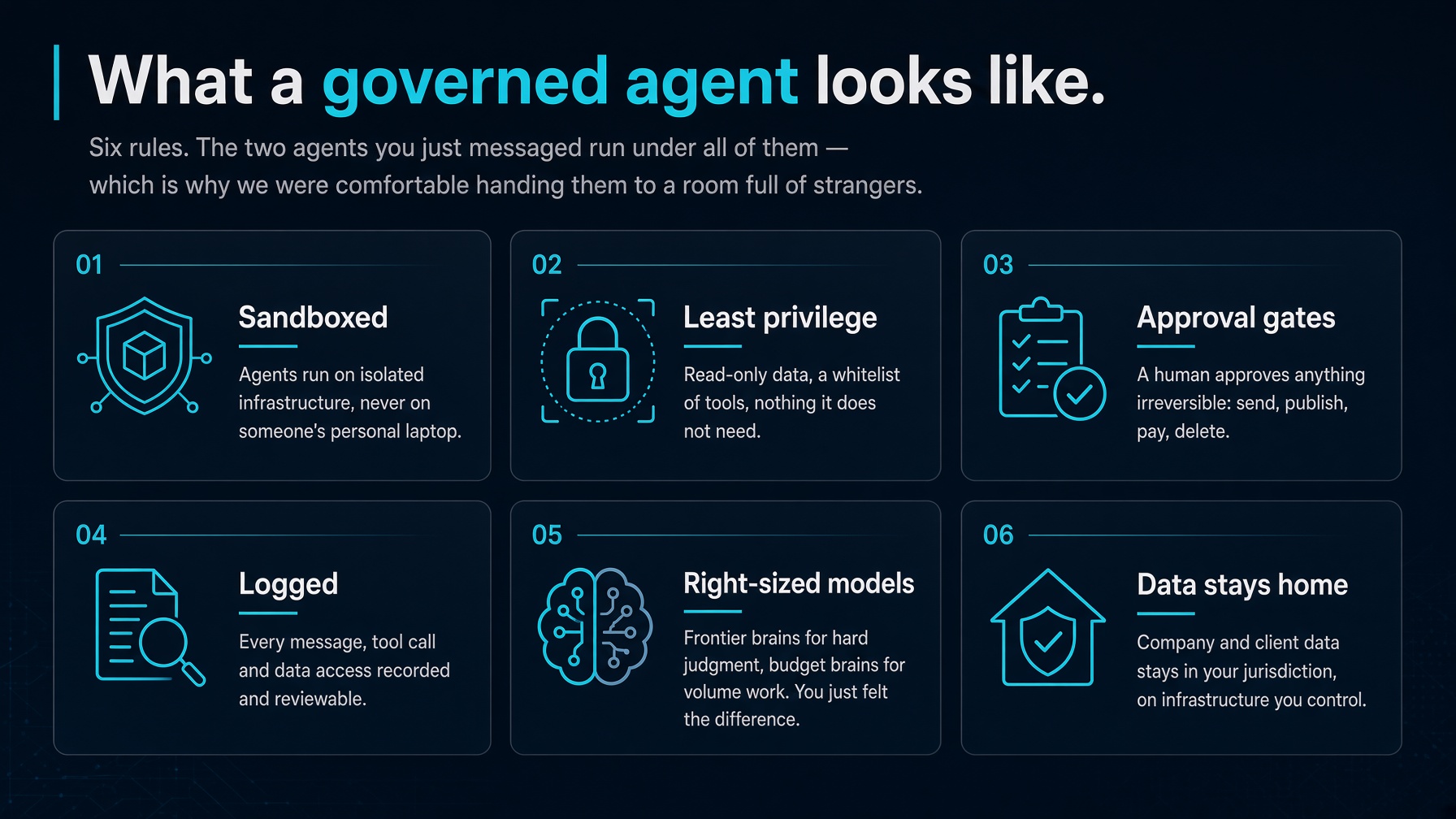
Six rules. The two agents you just messaged run under all of them, which is why we were comfortable handing them to a room full of strangers.
Agents run on isolated infrastructure, never on someone's personal laptop.
Read-only data, a whitelist of tools, nothing it does not need.
A human approves anything irreversible: send, publish, pay, delete.
Every message, tool call and data access recorded and reviewable.
Frontier brains for hard judgment, budget brains for volume work. You just felt the difference.
Company and client data stays in your jurisdiction, on infrastructure you control.
The goal is not transformation. It is an informed decision, made with your own evidence instead of a vendor's.
Inventory what is already running in your teams, amnesty included. Write the two-page policy: what is allowed, what is banned, what needs approval.
One governed pilot, one workflow, real data. Pick a production task you measured in hours, run it under the six rules, and keep the humans in the loop.
Measure hours saved, quality, and incidents. Scale what worked, kill what did not, and publish the decision internally so the shadow agents come into the light.
The demo agents stay live for a week. The brief below carries everything from today, sources included.